Lemon Sharks in Cape Verde
Lemon sharks in Cape Verde: the nursery at Shark Bay on Sal, how many there are, how big, when they are there, and how to watch them without harm.
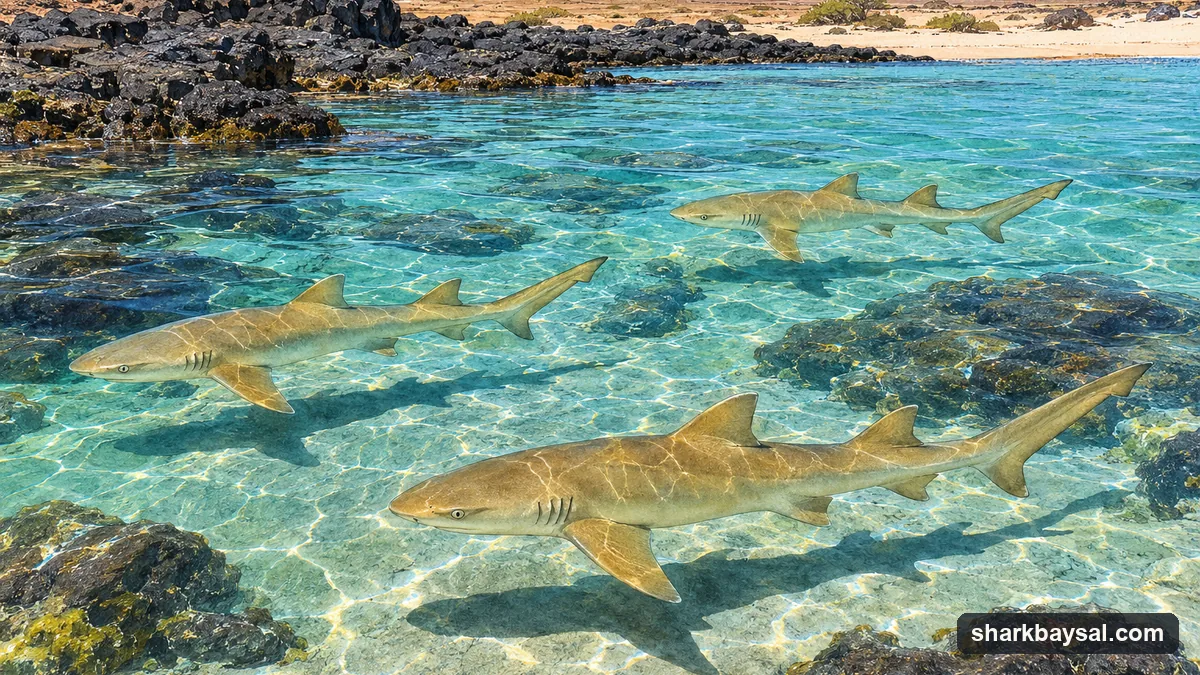
Cape Verde’s lemon sharks are the young ones of Shark Bay, a rocky nursery on the east coast of Sal known to researchers as Parda Reef. Between 12 and 23 newborn and juvenile lemon sharks gather there in every month of the year, most of them 50 to 80 cm long, in water shallow enough to stand in. You can wade among them in water shoes; you must not touch or feed them. The simplest way to go is Sal Experiences’ two-hour eco-tour from Santa Maria, from £24 in current promotion (usually £25) a person (checked October 2026), with water shoes lent free.
The species
The lemon shark, Negaprion brevirostris, is a stocky coastal shark of warm Atlantic and eastern Pacific waters, named for its yellow-brown skin. Its two dorsal fins are almost the same size, which tells it apart from most other sharks at a glance. Adults reach about 3 m. Females give birth every two or three years to litters of 7 to 14 pups, in shallow, sheltered water where the young are safe from larger predators, and the pups can stay in such nurseries for years. On the IUCN Red List the species is Vulnerable (assessed 2020). The threats Projeto Biodiversidade lists for it are overfishing and by-catch, building on the coast, and unregulated tourism.
Cape Verde has more than 60 species of sharks and rays. The lemon shark is the one you can stand next to.
The nursery at Shark Bay
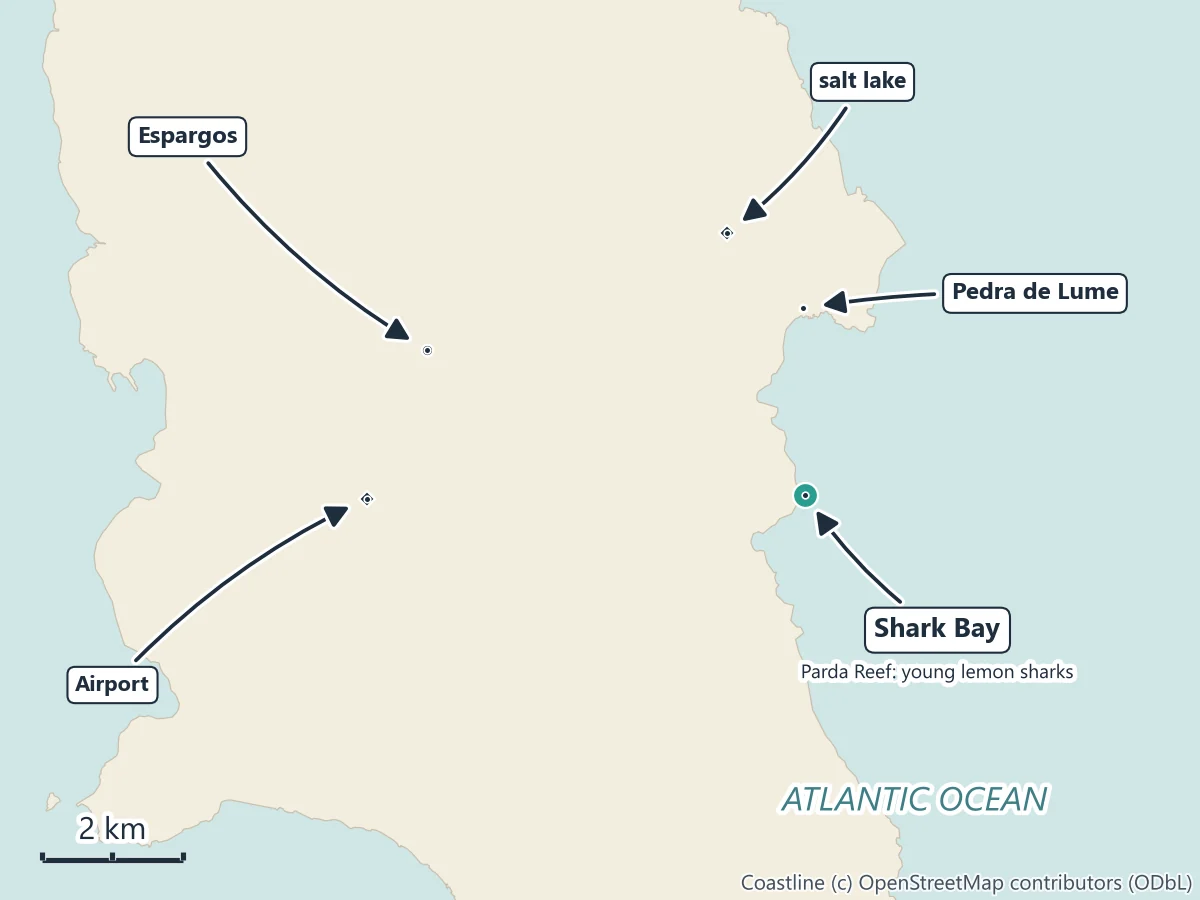
Shark Bay is a stretch of shallow, rocky shore with a small beach at each end, south of the old salt village of Pedra de Lume. Since 2011 the Sal conservation group Projeto Biodiversidade has been counting and tagging its sharks, with Queen Mary University of London. Their figures, published in 2025 by the IUCN’s shark specialists when they named the bay an Important Shark and Ray Area:
| What they found | Figure |
|---|---|
| Young lemon sharks seen together | 12 to 23, in every month of the year |
| Newborns and first-year sharks | About 80% of the group; about 90% from June to September |
| Length of the 81 sharks measured (2022 to 2025) | 50 to 92 cm; nine in ten under 80 cm |
| Length at birth | 60 to 65 cm |
| Longest stay of a tagged shark | Up to 22 months |
The researchers counted by standing in the water for two and a half hours at a time, noting every shark each ten minutes, and added cameras, tags and drone flights. So the 12 to 23 is what a patient person standing in the shallows sees, not a guess.
When they are there
All year. The research counts find young sharks in every month, so there is no shark season to plan round; the share of newborns rises from June to September. What changes is the sea: on windy, choppy days the waves make it harder to stand still and see them. Sal is dry for most of the year, with what little rain falls coming mostly in August, September and October.
Check dates for the shark eco-tour
Are they dangerous?
The sharks at Shark Bay are babies, most shorter than your arm, and they swim round people’s legs rather than at them. Still, they are wild animals with teeth, and sensitive ones, and the guidance from the people who study them is firm: never touch or feed a shark, even if someone suggests it, and decline any tour that feeds them.
- Stand still and let them come. Splashing sends them away.
- Keep your hands out of the water.
- Wear water shoes the whole time: the bottom is rock, with sea urchins.
The is Shark Bay safe guide covers children, the rocks and the waves.
Protected?
Not by law. Shark Bay is not one of Sal’s protected areas, and Projeto Biodiversidade points out that lemon sharks are not protected under Cape Verdean law. The Important Shark and Ray Area name is a scientific recognition, not a reserve. Their protection rests on how visitors and guides behave in the water, which is a good reason to go with a guide who keeps people still and hands-off.
Pick your shark trip
Lemon Shark Eco-Tour to Shark Bay from Santa Maria
Two hours from Santa Maria, Espargos or Murdeira: about 40 minutes in the shallows with a guide, water shoes lent free.
Check dates →Shark Bay, Pedra de Lume Salt Lake and the Blue Eye Half Day
Shark Bay, a float in the Pedra de Lume salt lake and the Blue Eye in four hours, with both entries included.
See the half day →Pedra de Lume Salt Lake and Shark Bay Half Day
Shark Bay first, then the old salt village and about 50 minutes at the salt lake, in three hours. The lake's €6 entry is paid on the day.
See the salt lake trip →Prices, ratings and review counts from the listings, GetYourGuide checked October 2026. Operators price by date and season, so treat the figures as the shape of the market, not a quote. The €6 entry checked October 2026.
Lemon sharks elsewhere in Cape Verde
On Boa Vista, the 4x4 tours from Sal Rei stop at a bay on the west coast where young lemon sharks are looked for when the tide and the sea allow, next to a bay where turtles feed; see Boa Vista shark and turtle tours. For wading with them in numbers, Sal’s Shark Bay is the place.
Who should pick something else
- You want the whole island in a day: see Sal island tours compared.
- You have small children: read is Shark Bay safe? first.
- You came for turtles: from July to October the night walks on Sal and Boa Vista watch loggerheads nesting; see the Boa Vista guide.
More Trips with Open Dates
More Sal and Boa Vista Trips with Open Dates
Shark Bay, island tours, boats and turtle walks with live availability. Times and cancellation terms are on each listing.
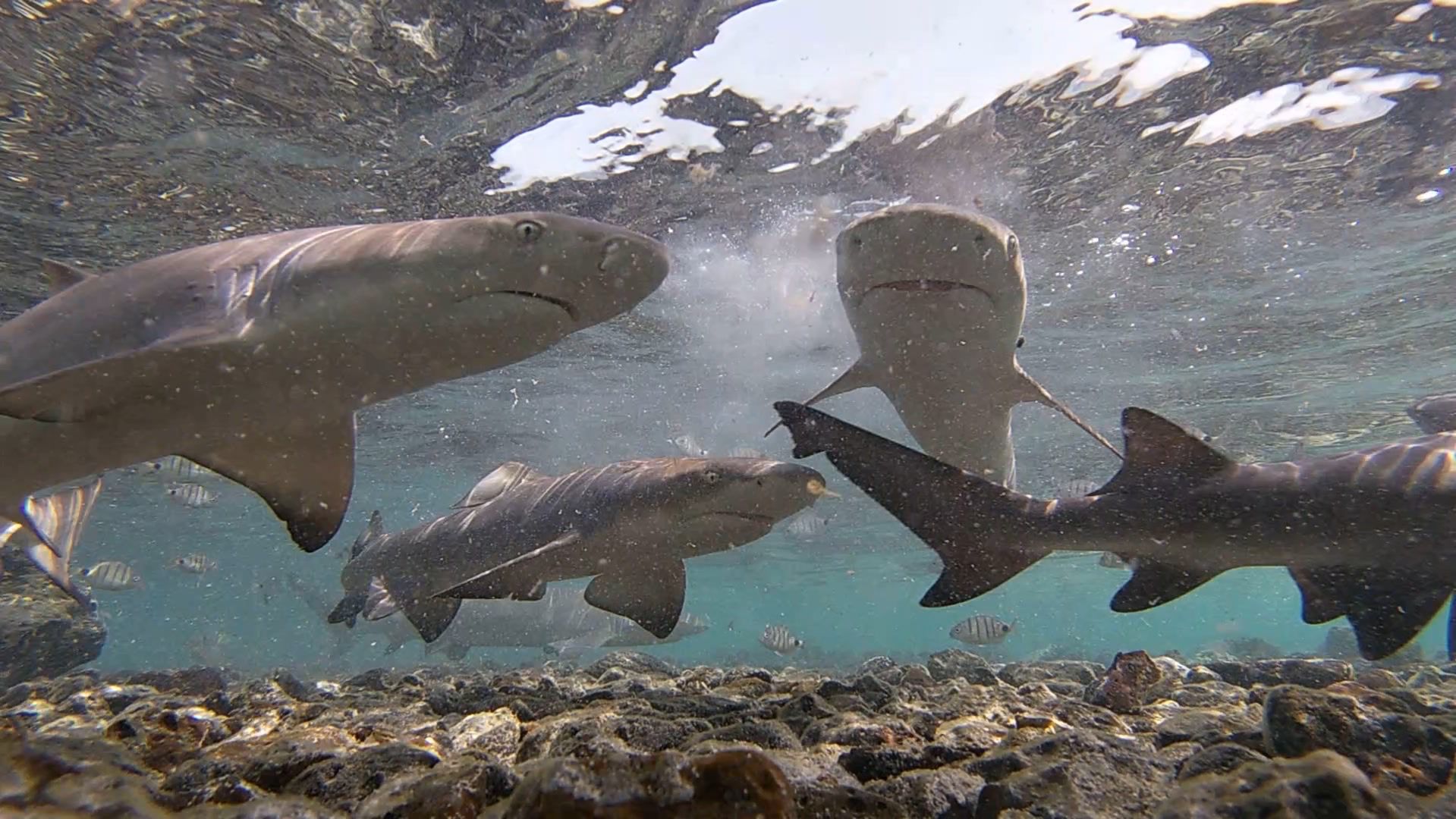
Two Hours with the Lemon Sharks
Sal Experiences' eco-tour from Santa Maria: about 40 minutes in the shallows of Shark Bay with a guide, water shoes lent free.
See dates